


The COP30 Belém Package is a testament to the growing political fracture within climate diplomacy. While technical and equity frameworks saw breakthroughs, the summit ultimately failed to compel sufficient mitigation action. The final decisions highlight a dangerous reliance on voluntary “transition” efforts over mandatory “phase-out” mandates, leaving the world dangerously far from the 1.5°C goal.
The Mitigation Failure: The Fossil Fuel Standoff
The core mission of COP30, to accelerate the shift away from high-carbon energy, was fundamentally compromised. The decision on fossil fuels reflects a win for producing nations and a setback for climate ambition.
Omission of ‘Phase-Out’ Language
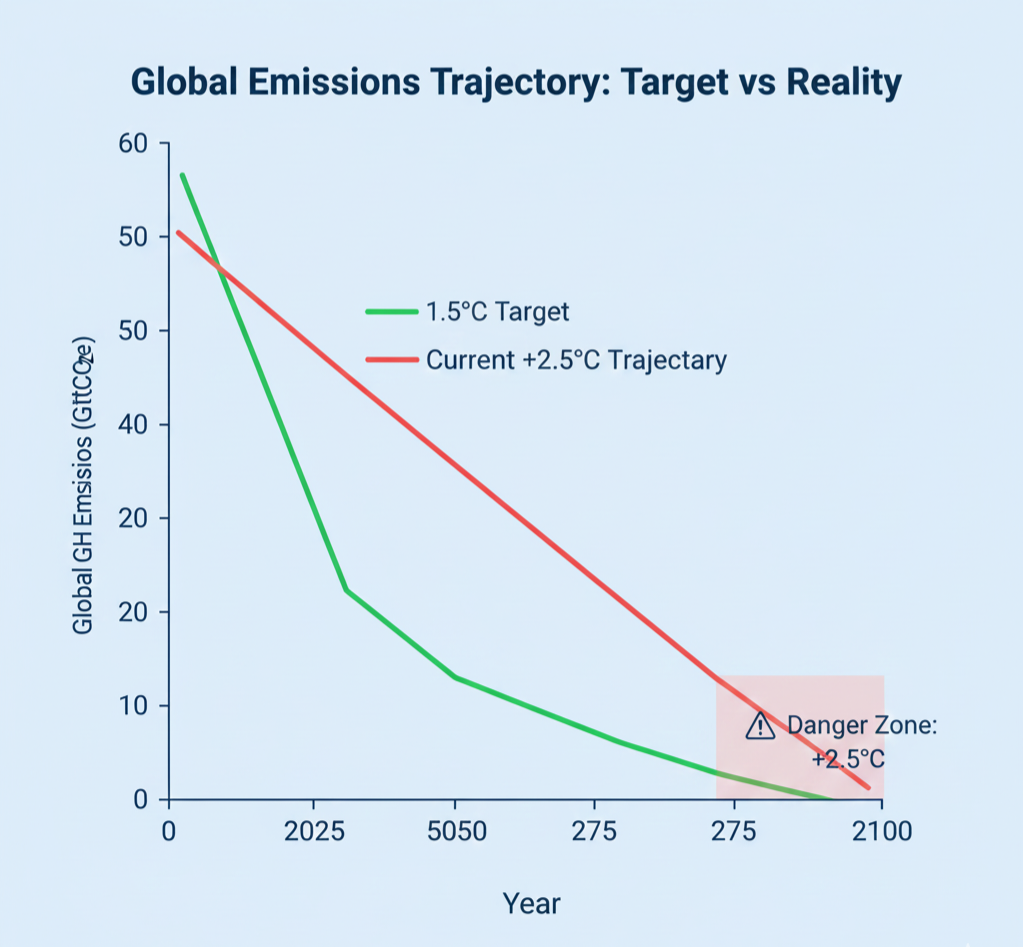
As documented in the Official COP30 Global Mutirão Text, it conspicuously avoided a formal call for a fossil fuel phase-out. Instead, it opted for the softer language of “accelerating efforts towards a just, orderly and equitable transition.” The consensus language directly clashes with scientific requirements.
From its analysis in the IEA Net Zero Roadmap 2023, the International Energy Agency (IEA) has repeatedly stated that achieving Net Zero by 2050 (and thus the 1.5°C limit) requires no new long-term upstream oil and gas investments from this point forward.
Based on current Nationally Determined Contributions (NDCs) submitted after the summit, the global emissions trajectory remains firmly entrenched in a +2.5°C warming scenario. This figure is substantially higher than the 1.5°C target, confirming that the voluntary “transition” language is insufficient to bend the emissions curve; says the assessment detailed in the Climate Action Tracker Post-COP Analysis.
This decision preserves the profit potential of major hydrocarbon producers and ensures that the world will overshoot its crucial carbon budget faster than anticipated, deferring the real challenge to future COPs.
Adaptation and Finance: Needs Outstrip Pledges
Finance for adaptation was the area of most concrete forward motion, yet even these achievements are undermined by a lack of scale and urgency when compared to objective data on climate vulnerability.
Adaptation Finance Goal & Timeline
A major political win was the agreement to triple adaptation finance for developing nations. However, this commitment was tied to a new, extended deadline of 2035.
The tripled commitment, estimated at $120 billion per year, is a significant increase but remains grossly inadequate. The latest UNEP Adaptation Gap Report 2024 estimates that the true annual adaptation costs for developing nations will range between $250 billion and $360 billion per year by 2030. The new goal meets less than half of the minimum projected need.
Pushing the deadline to 2035 means that the finance will arrive when climate impacts such as sea-level rise and extreme weather are already compounding. This delay increases the cost and complexity of required resilience projects due to compounding damage.
Tropical Forest Forever Facility (TFFF) Gap
Despite the Amazon host, the TFFF, intended to be a flagship non-repayable conservation fund with a $25 billion anchor goal, launched with a substantial capital shortfall. The COP30 Finance Committee Report on Initial Pledges shows that the facility secured approximately $6.6 billion in initial pledges, leaving an immediate funding gap of $18.4 billion against its target.
This massive deficit severely restricts the TFFF’s ability to scale up critical operations like advanced satellite monitoring and predictable payments to Indigenous and local communities, who are the most effective guardians against deforestation.
High-Impact Procedural Breakthroughs: Codifying Equity
The most enduring and positive legacy of the Belém Package is the formal, legal integration of equity principles into the UNFCCC framework, which changes how climate action must be pursued.
Formalizing Just Transition and IPR
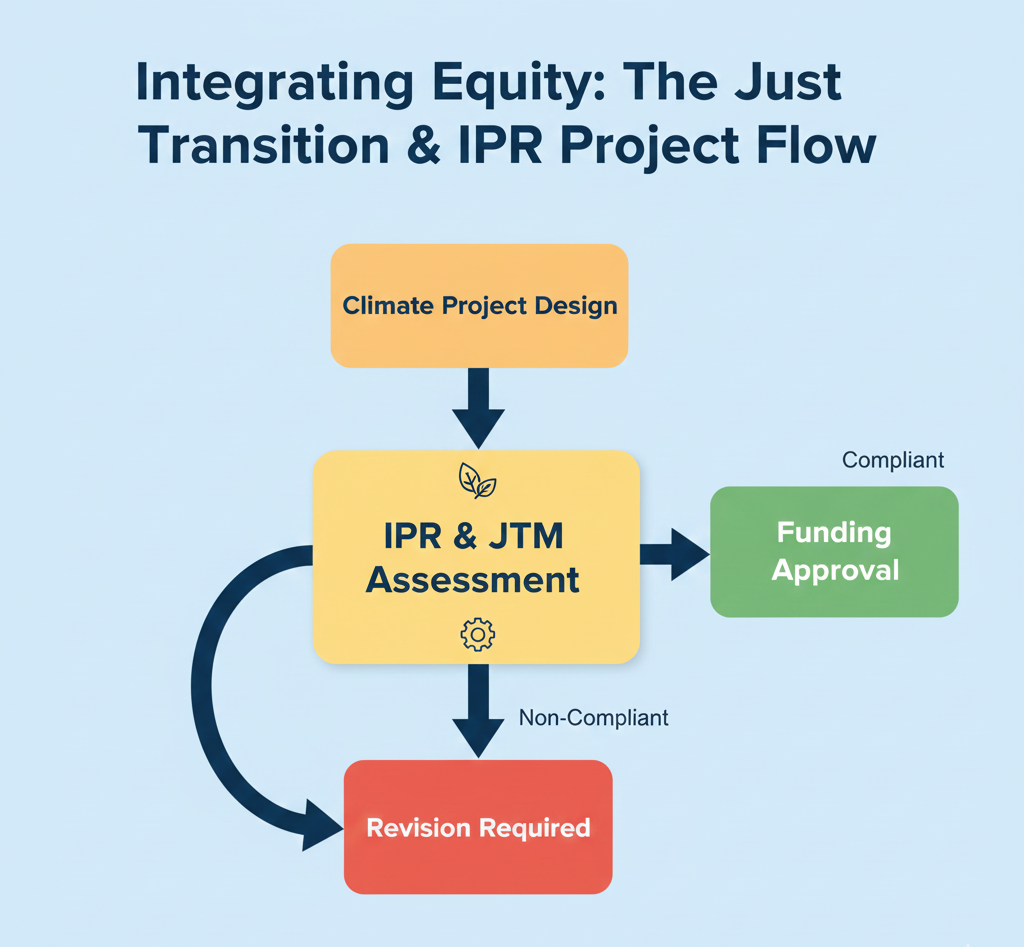
The Just Transition Mechanism (JTM) and the recognition of Indigenous Peoples’ Rights (IPR) were formally approved and embedded within the binding text of the Belém Package. By integrating JTM and IPR into the core texts (specifically referenced in UNFCCC Global Mutirão Decision Text), the UNFCCC elevates these issues from voluntary side-events to mandatory criteria for national climate planning and the deployment of public climate finance.
This codification creates a new mechanism for accountability: climate funds (like the GCF and MDBs) must now demonstrate explicit alignment with JTM principles to prevent funding projects that exacerbate social inequalities or abandon workers in transitioning industries. This decision mandates a structural shift in climate project design, ensuring social impact and rights are assessed before technical deployment.
Final Assessment: The Belém Package’s Legacy
The Belém Package excels in procedural justice by providing the tools and frameworks (GGA metrics, JTM, IPR) to ensure future action is fair and measurable. However, it abjectly fails in emissions mitigation, effectively greenlighting a continued, high-risk warming trajectory by bowing to political pressure on fossil fuels.
The true impact of Belém will be judged not by the text, but by whether the newly codified equity tools can pressure high-emitting nations to close the funding gaps and aggressively accelerate their NDCs before the carbon budget is entirely exhausted.
 Kushalam